Mobile phone: 18815239758 (same as WeChat)
Phone: 0576-89881178
Phone: 0576-89825885





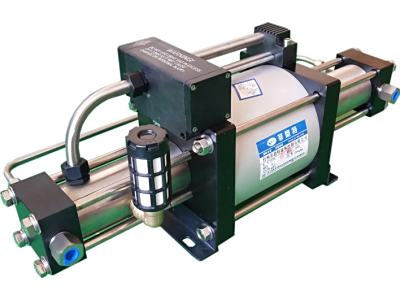
The selection of pneumatic nitrogen booster pump should pay attention to the following points: driving pressure, output pressure, output flow rate, inlet pressure. The driving pressure is the power source for driving the nitrogen booster pump, and the general driving pressure range is 3-8 bar. 2、 Output pressure refers to how much nitrogen output pressure the customer needs to meet the on-site operating conditions. Does pressure require a stable output or is it sufficient to meet the required pressure? 3、 What is the desired output flow rate for the customer after nitrogen pressurization? Generally, we use standard units or Ln/min for conversion.
READ MORE
Pneumatic booster pumps are divided into two forms: gas booster pumps and gas-liquid booster pumps, both of which can be collectively referred to as reciprocating booster pumps. So today we will talk about the difference between a single acting pump and a double acting pump. A single acting pump refers to a pump that is pressurized only once within one stroke, with only one pump head, while a double acting pump refers to a pump that is pressurized twice within one stroke,
READ MORE
Gas booster pumps can be used in industries such as gas testing systems and fluid transportation. With the development of products and the upgrading of new and old products, more and more pressure bearing products require gas testing.
READ MORE
The ultra-high pressure water pressure testing machine uses compressed air as its power source, and outputs hydraulic pressure proportional to the driving gas source pressure. By adjusting the pressure of the driving gas source, the corresponding hydraulic pressure can be obtained. When the pressure of the driving gas source is balanced with the hydraulic pressure, the hydraulic testing machine stops charging
READ MORE
Firstly, before using a pneumatic booster pump, it is necessary to clarify the diameter of the driving pressure output pipe that needs to be installed on site. The inlet of the Feentor is usually a 12mm quick connector. The output end is usually G1/2 internal thread, and the on-site user needs to replace the corresponding joint according to the thread size of the pump for connection. In addition, the use of a binary joint
READ MORE