
Mobile phone: 18815239758 (same as WeChat)
Phone: 0576-89881178
Phone: 0576-89825885


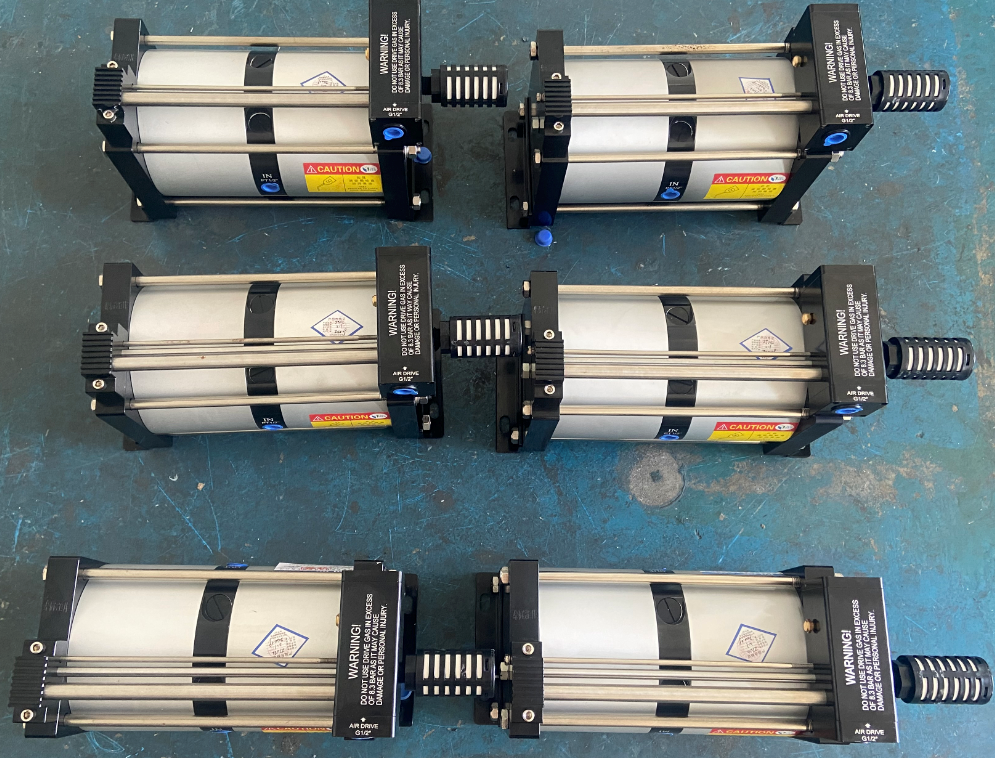
Common terms for pneumatic air booster pump
Common terms for pneumatic compressed air booster pump
1. Pressure:
The commonly used units of pressure are bar and MPa. The commonly used kilogram is bar (1 kilogram is 1 bar), and 1 bar=0.1 MPa=100 KPa
2. Traffic:
In China, it is also known as displacement. The gas volume discharged by a pneumatic compressed air booster pump per unit time generally refers to the gas volume at normal atmospheric pressure, and the commonly used unit for pneumatic compressed air booster pumps is L/min.
3. Boost ratio:
Boosting ratio refers to the relationship between the initial pressure and the multiple after boosting. For example, if the initial pressure is 5 bar and the boosting ratio is 2, then the boosted pressure is 5 × 2=10 bar.
4. Gas consumption:
The conventional air consumption of a pneumatic booster pump is generally 1 cubic meter per minute. But it will change with the pressure of the pressurized gas, and as the pressure increases after pressurization, the gas consumption will correspondingly decrease. When the set pressure is reached, the operation will stop, and the consumption will be zero.
There are not many commonly used terms for pneumatic booster pumps. When selecting a pneumatic booster pump, you can combine these common terms to choose the model. If the initial pressure of compressed air is 5 bar, a flow rate of 200 L/min is required, and the pressure reaches 8 bar. At this point, the ZTM02 air booster pump can be selected (with a boost ratio of 2:1 and a standard flow rate of 500L per minute driven at 5bar).
 Air booster pump
